Cloth seats trap dirt at the fibre level. A surface wipe leaves most of it behind, and dampening without extraction often pushes a stain deeper into the foam. Most videos show one method — extractor, steam, or hand-clean — without explaining which suits your situation.
Short verdict
For a thorough clean from start to finish, ChrisFix is the one to watch: it covers vacuuming, extracting, brushing the stitching, seat-belt cleaning, and a final protectant pass, all on genuinely dirty seats. If you want a quick clean with nothing but a spray bottle and a shop vac, start with Chris Notap — two and a half minutes, no fuss. For a side-by-side look at the full toolkit — extractor, steam machine, and hand method — AMMO NYC walks through all three so you can decide what suits your situation before buying anything.
The ranking
1
Best overall
How To Super Clean Cloth and Leather Seats
ChrisFix · 20:48 · Nov 2020
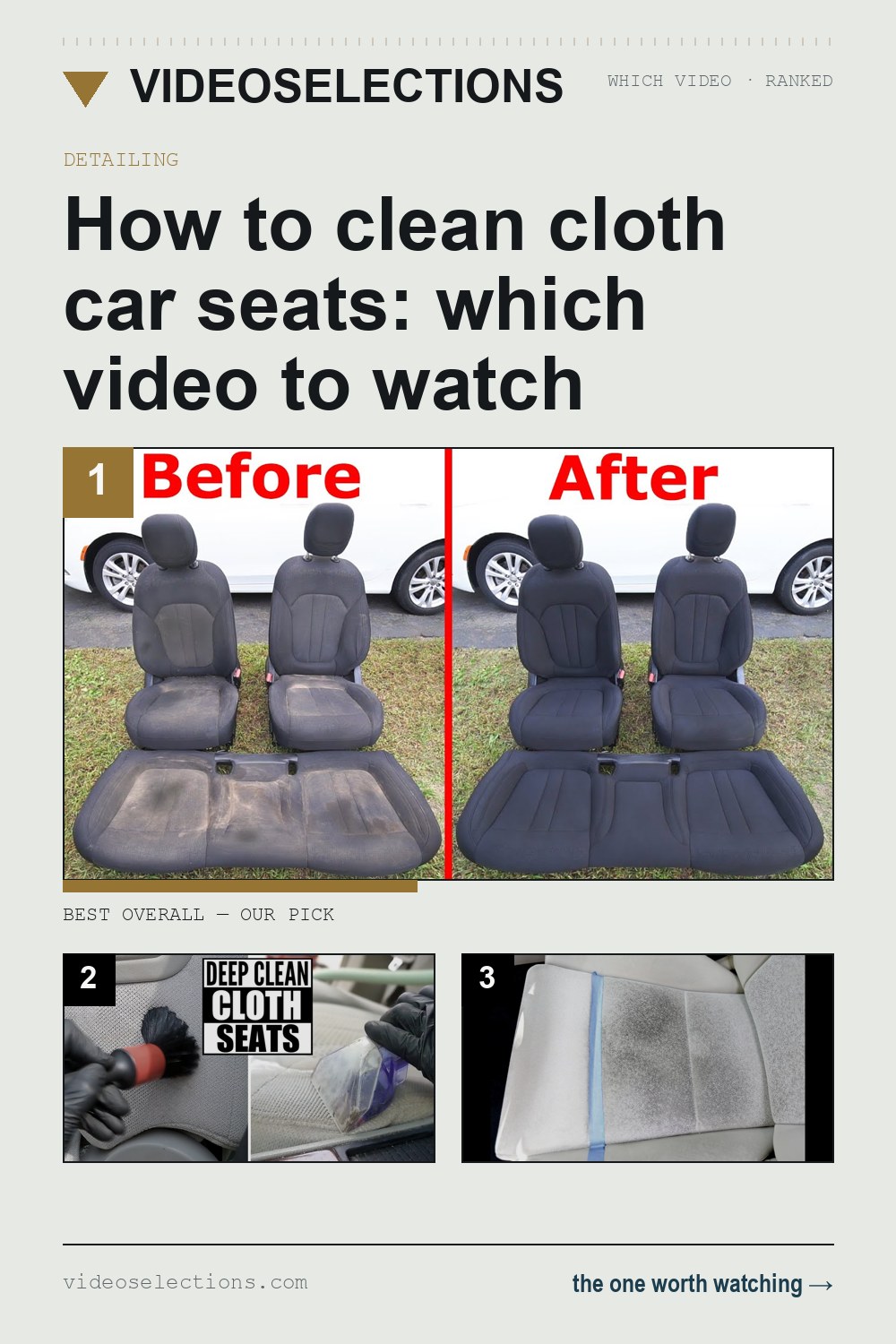
ChrisFix removes the passenger seat from the car, vacuums into the stitching with a brush 3:03–3:18, runs a carpet extractor to dissolve and suck deep-set dirt out of the foam 5:03–5:24, then adds a protectant and cleans the seat belt in full. He shows two seat conditions — a typical daily-driver example and one caked with mud — so the method scales to both.
Why it ranks here: It earns top spot because it treats the seat as a complete object: bolsters, stitching lines, the back of the backrest, and the belt. The extractor guidance is specific — don't saturate, dissolve the dirt into the foam a little, then suck it out — and a viewer with 12 years of accumulated grime confirms the process took around three hours. Battery disconnection is shown first 1:07 before any seat is unbolted. No other video in the pack covers this breadth without losing clarity.
~20 min · moderate effort · extractor vacuum required for deep clean
2
Best extractor technique
How To DEEP CLEAN Cloth Car Seats The Right Way And Remove Stains and Dirt
Stauffer Garage · 10:04 · May 2019
Stauffer Garage loads an extractor with warm water diluted 20:1 with Full X cleaner and uses a forward-and-back two-pass method — first pass injects and extracts fluid, second pass pulls additional moisture 1:23–1:36. For tight spots around airbag seams and seat edges, he switches to Folex spray and a soft-bristle brush, wiped clean with a microfiber cloth 5:20–5:38.
Why it ranks here: The advice to recline the seat before vacuuming 0:58–1:10 — so loosened debris does not wick into the foam during extraction — is a practical step absent from other videos. The Folex spot-treatment section proves you can skip the extractor entirely for surface dirt and still get a solid result. He also budgets three to four hours for a full front-and-back job 4:36–4:40, which sets realistic expectations rather than promising a miracle. A commenter warns that some modern cars (BMW E90 and similar) carry seat-mounted airbag sensors — relevant because this video recommends removing seats 3:41 without showing battery disconnection.
~10 min · moderate effort · extractor useful but Folex method works without one
3
Best for comparing methods
Best Cloth Seat Cleaning Tricks: Subaru Legacy
AMMO NYC · 16:21 · Oct 2014
AMMO NYC's Larry demonstrates three approaches on the same Subaru Legacy cloth seats: an upholstery extractor, a steam machine, and a hand method using warm water, laundry detergent, and a scrub pad 8:32–8:43. Each section is shown in sequence so you can see the trade-offs.
Why it ranks here: No other video in the pack puts all three methods side by side on the same seat. The warning about oversaturation 4:44–4:58 — soaking the foam causes further staining rather than less — is the clearest statement of that risk anywhere in the evidence. A professional commenter appreciated the absence of forced product placement, and the explicit mention of laundry detergent as a soap substitute makes the hand-method section genuinely budget-friendly. Most useful when you are still deciding what kit to buy.
~16 min · introductory · no tools required for the hand-method section
4
Best zero-kit approach
Easiest way to ● Clean Cloth Car Seats for Zero Dollars !
Chris Notap · 2:35 · Aug 2017
Chris Notap fills a spray bottle with hot water and a little dish soap, soaks half the seat at a time, then sucks the water straight out with a shop vac. He repeats the pass four or five times on a fresh ketchup-and-Coke stain and has it gone in about five minutes. Leave the windows open to dry 2:13–2:17.
Why it ranks here: For a fresh spill or light soiling, the method works — a commenter who ran an upholstery-cleaning business confirms it, and another cleared stubborn stains from a 2005 Jeep Liberty that dedicated upholstery cleaners had failed on. The video is two and a half minutes long, which means you will be cleaning before most tutorials have finished their intro. If you do not own a shop vac, a commenter notes the free vacuums at a car wash provide enough suction for this method.
~2 min · easy · spray bottle and shop vac only
5
Best quick UK method
How To Clean Fabric Car Seats
AutoglymUK · 1:31 · Mar 2017
AutoglymUK's Mark runs through three clear steps in 90 seconds: vacuum, spray Interior Shampoo onto the seat in sections and scrub with a damp foam sponge, then wipe the lifted dirt away with an absorbent cloth rinsed in a bucket of clean water. He stresses cleaning the whole seat or at least a full panel at a time to avoid a patchy finish 1:15–1:22.
Why it ranks here: The foam-and-bucket approach keeps saturation low because the cleaning is mechanical rather than flood-and-extract. The reminder to work panel by panel — not just the stained spot — prevents the ring marks that commenters on other videos complain about. Autoglym Interior Shampoo is widely stocked in UK supermarkets and motor factors, making this the most accessible method for a UK viewer without specialist kit. A commenter reported excellent results on cream fabric seats in a second-hand BMW 320i.
~2 min · easy · foam sponge, bucket, and Interior Shampoo needed
6
Best home method without an extractor
How to Clean cloth car seats at HOME! (Without Extractor)
Carlo Joseph · 9:03 · Jan 2020
Carlo Joseph cleans stained cloth seats using Meguiar's all-purpose cleaner, a detailing brush, and a shop vac. He places a microfiber towel against the seat crease as a barrier to limit how deep the product soaks before vacuuming 4:01–4:10. A steam-cleaner pass is demonstrated at the end as an upgrade step for deeper cleaning.
Why it ranks here: The towel-barrier trick is practical and not shown in any other video in the pack — it reduces oversaturation without needing an extractor. He is also explicit about avoiding dish soap 1:12–1:18 and recommending an all-purpose cleaner instead, putting him in direct disagreement with the Chris Notap approach. The two-stage structure (hand-clean first, steam to finish) is a realistic workflow for someone who owns a small steam cleaner but not a full extractor.
~9 min · moderate effort · shop vac and all-purpose cleaner; steam cleaner optional
7
Quickest single-product fix
HOW to Clean STAINED Dirty Car Seats [QUICK WAY]
iDV Create · 4:54 · Apr 2019
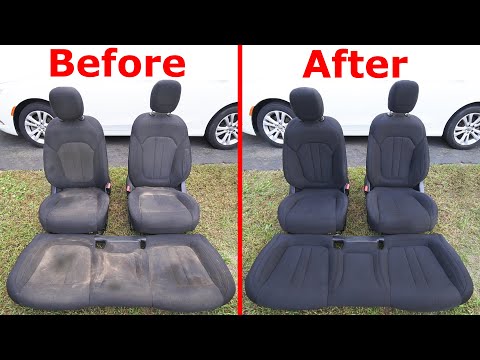
iDV Create sprays OxyClean upholstery foam across the seat, scrubs it in with the product's built-in brush head, and vacuums up the foam and lifted dirt. The whole clip is under five minutes and the product costs around $3–4. The creator notes that old or peeling seat covers need the softer bristle side to avoid tearing 1:46–1:56.
Why it ranks here: Useful when you want one off-the-shelf product and no mixing. The explicit warning about brush hardness on worn covers is a practical limit that other foam-spray approaches skip over, and it is grounded in what the creator actually shows on camera. Results are visible and the method is easy to repeat. A commenter adds that spraying dried foam with hot water from a spray bottle before vacuuming makes it much easier to extract.
~5 min · easy · OxyClean foam spray and a vacuum
8
Best drill-brush method
Remove Stains From Car Seats In 3 EASY Steps!
Chemical Guys · 5:29 · May 2025
Chemical Guys' Joey dilutes Fabric Clean at a 6:1 ratio in a secondary spray bottle, saturates the seat with a fan-spray nozzle, and scrubs with a spinner drill brush to lift a coffee stain and its odour. The residue is wiped off with a microfiber cloth and the seat left to air dry.
Why it ranks here: The drill brush covers a seat faster than hand-scrubbing, which matters across multiple seats. The citrus formula targets stain and smell at once 2:47–2:54, a combination not mentioned by other videos. The video is product-specific throughout, and a commenter flagged a discrepancy between the dilution ratio shown in the video and the marking on the bottle itself.
~5 min · easy · drill with brush attachment required
9
Best steam-focused demonstration
How To Clean Car Cloth Seats- Car Interior Steam Cleaning
Detail Groove · 8:22 · Mar 2017
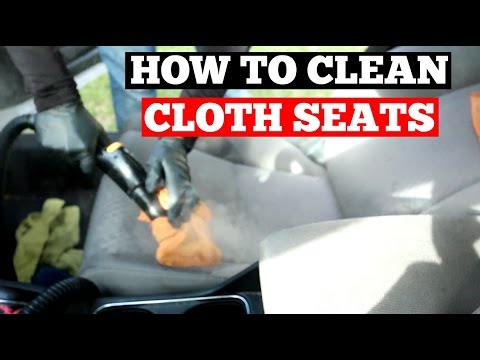
Detail Groove uses a McCulloch 1385 steam cleaner on cloth seats and shows how to wrap the attachment head in a microfiber towel to reduce the amount of moisture introduced 3:15–3:23. He also runs through a brush-and-all-purpose-cleaner alternative for viewers without a steamer, comparing the two approaches directly.
Why it ranks here: The side-by-side structure makes this a useful companion to the AMMO NYC video if you are choosing between methods. The towel-wrapped attachment tip addresses the oversaturation risk raised elsewhere. A top commenter (206 likes) adds the correction that cleaner should go onto the seat before steaming, not after — wet fibres cannot absorb cleaning product — which is the most actionable piece of audience knowledge in the pack.
~8 min · moderate effort · steam cleaner shown; brush-only method also demonstrated
Where the videos disagree
Hot water or cold water for the initial treatment?
Chris Notap uses hot water throughout and credits it with softening the dirt quickly. A commenter on that video with dry-cleaning experience recommends cold water for the first passes, switching to hot only once the stain is moving, because hot water sets protein-based stains.
Our read: Start cold if you do not know the stain's origin — blood, egg, and dairy set under heat and become harder to remove. For food dyes or drink stains such as cola or ketchup, the difference matters less, but cold is the lower-risk default.
Is dish soap safe to use on cloth seats?
Chris Notap uses dish soap with hot water and achieves visible results on fresh stains. Carlo Joseph explicitly advises against it 1:12–1:18 and uses a dedicated all-purpose cleaner instead. A commenter on the Chris Notap video warns that dish soap can leave residue behind that attracts new dirt.
Our read: Dish soap works for a quick clean, but it should be followed by a plain-water rinse and extraction to remove residue. A dedicated upholstery or all-purpose cleaner is the lower-risk choice for a full clean.
Should you apply cleaner before or after steaming?
Carlo Joseph applies cleaner first, then steams as a finishing step. The Detail Groove comments (206 likes) argue for cleaner-first on the grounds that fibres already saturated with steam cannot absorb cleaning product, reducing its effectiveness.
Our read: The commenter's logic is sound and consistent with how the chemistry works: cleaner goes in first to loosen and dissolve dirt, steam follows to heat and lift it. Steam-first is the more common order shown across the videos, but cleaner-first appears better supported by the evidence.




![HOW to Clean STAINED Dirty Car Seats [QUICK WAY]](https://i.ytimg.com/vi/D21ZytmB2cY/hqdefault.jpg)