Water spots form when tap or sprinkler water dries on paintwork or glass, leaving behind a ring of dissolved minerals. The right treatment depends entirely on how long they have been there: fresh deposits lift with vinegar or a gel product, older ones need a dedicated remover, and anything that has etched the surface needs a machine polisher — most videos skip that triage step and jump straight to one method. That is why people spend a Sunday afternoon with the wrong approach.
Short verdict
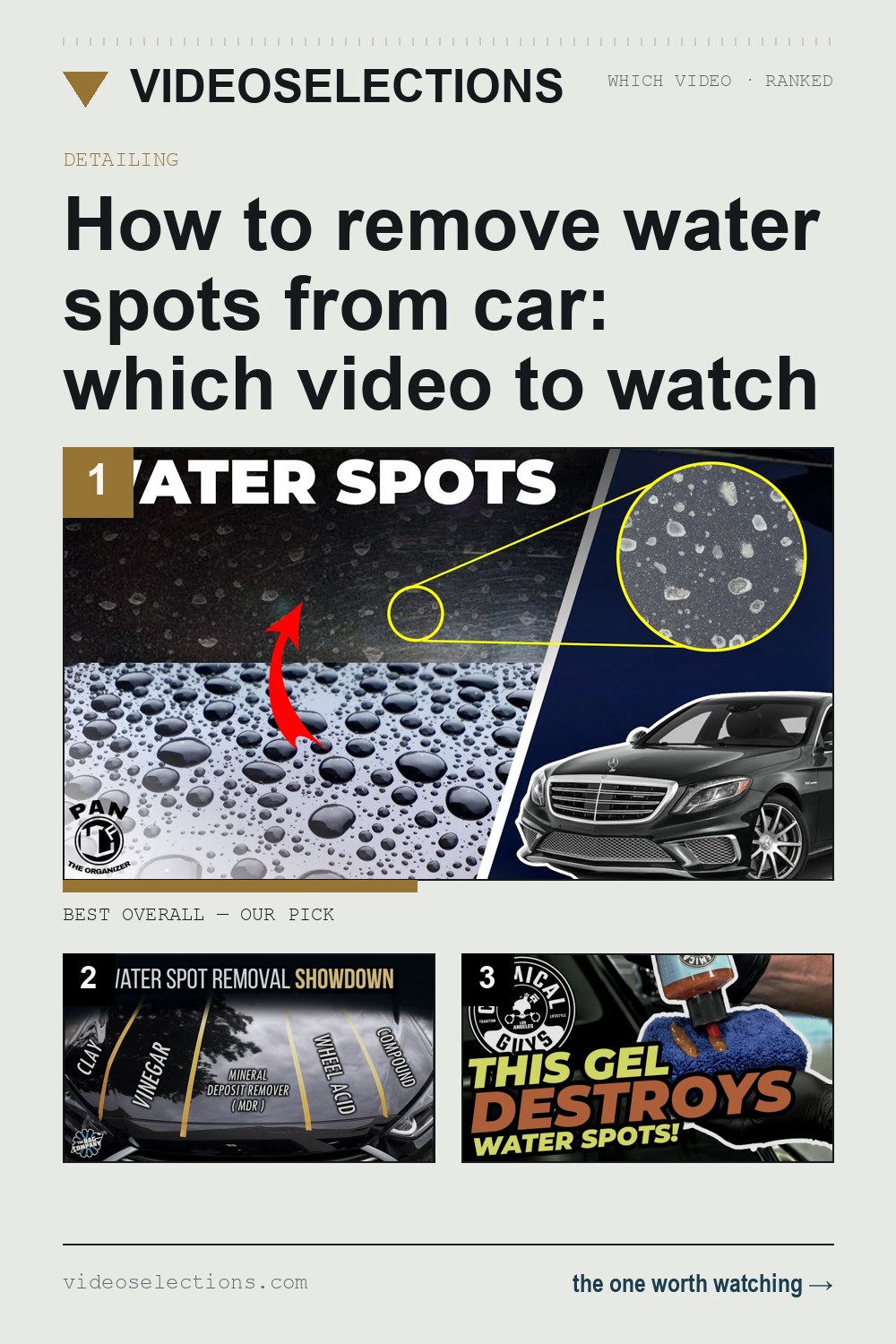
For a first encounter with water spots, start with Pan The Organizer: it covers every severity level in order and tells you when to stop escalating. For a quick demo on fresh paint spots using a dedicated product, the Chemical Guys 'Less Than 5 Minutes' tutorial shows the full routine clearly. If the problem is on glass, AmplifyDIY makes the strongest case for 0000-grade steel wool with a controlled side-by-side test. Spots that have visibly etched into paint or glass need a different approach; Car Craft Auto Detailing covers that honestly, including what cannot be fixed at home.
The ranking
1
Best overall
WATER SPOT REMOVAL TUTORIAL !!
Pan The Organizer · 19:11 · Sep 2020
Pan, who states he has been detailing cars for over 23 years, lays out a tiered escalation: start with a diluted white vinegar rinse for fresh spots, move to a dedicated water spot remover if that fails, then try a mild clay bar, and only reach for a machine polisher or paint correction compound if the deposits have etched into the surface. He closes with five prevention tips covering ceramic coatings, quick-detailer toppers, water filtration, and drying the car immediately after rinsing.
Why it ranks here: This ranks first because it starts with the question every other video skips: how deep is the problem? The tiered approach means most viewers can stop at step two rather than immediately reaching for a polisher. Pan stresses working in shade on a cool surface as a non-negotiable rule throughout — something others mention briefly or not at all. He introduces acid-based wheel cleaner as an option but explicitly restricts it to experienced detailers. The prevention section earns its length.
~19 min · intermediate · microfibre cloths required; machine polisher optional for severe cases
2
Best comparison
WATER SPOT REMOVAL: What Works Best? | Product Comparison
The Rag Company · 12:24 · Oct 2018
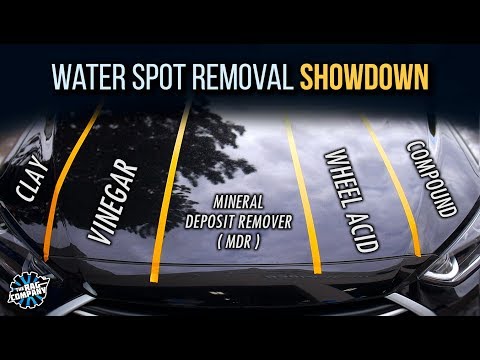
The Rag Company presenter uses total-hardness test strips to confirm the test car's water is near 425–500 parts per million — genuinely hard — then runs five methods side by side on taped-off sections of the bonnet: clay towel, white vinegar at a 1:1 dilution, mineral deposit remover, diluted wheel acid, and compound with a machine polisher. He explains why clay only removes deposits from the peaks of the paint texture while deeper valleys need chemical or abrasive treatment.
Why it ranks here: The only video in the pack that runs a controlled head-to-head test and explains the science of why each method works differently. If you want to understand why 1:1 vinegar barely shifts old spots while wheel acid removes them quickly, this is the video to watch. The most-liked comment (1,262 hearts) notes that substantive content begins at 11:24, so the first eleven minutes are setup and washing. The compound and polisher section produces the clearest result, though it requires the most equipment.
~12 min · intermediate · multiple products tested; polisher needed for the compound section
3
Best for fresh spots with a dedicated product
How To Remove Water Spots In Less Than 5 Minutes!
Chemical Guys · 5:47 · Oct 2023
On a black Hyundai Kona daily driver, the presenter cleans the surface with a waterless wash to remove loose dirt before applying Chemical Guys heavy-duty water spot remover gel in a cross-hatching pattern with a microfibre applicator. He then sprays the same waterless wash over the treated area at 4:04 to neutralise the gel and lift spent product cleanly, finishing with a clear before-and-after on the dark paint.
Why it ranks here: The clearest single-product demo in the pack: it includes the neutralisation step at 4:04 that prevents the gel drying on the surface and leaving streaks — a step the other Chemical Guys upload skips. The gel works on paint, glass, wheels, and bumpers without a machine. A commenter with 49 hearts flags a real risk: using the waterless wash to clean a heavily dirty car before a proper wash, then scrubbing, will scratch dark paint. If the car has not been properly washed first, do that before starting.
~6 min · easy · microfibre applicator + Chemical Guys heavy-duty gel
4
Best for glass and windows
How To Remove Water Spots From Car Windows
AmplifyDIY · 8:21 · Sep 2021
AmplifyDIY tests three household methods on a car window with severe hard-water deposits: lemon with salt, a magic eraser with diluted soapy water, and 0000-grade steel wool with soapy water. Steel wool clears the test section in under ninety seconds; the presenter then does the full windshield at 5:53, finishing to a near-spotless result in under ten minutes. Lemon and salt deliver almost no visible change.
Why it ranks here: The strongest evidence for the steel wool method, backed by multiple professional window washers in the comments — including someone who confirms it was standard practice in a premier bodyshop over thirty years ago. Lemon is shown here to be a waste of time for hardened deposits, and the magic eraser improves things but takes far longer for the same outcome. Grade matters: the presenter is clear at 3:17 that only 0000 (quad-zero) steel wool is safe on auto glass. The full-windshield demonstration at 5:53 shows the scale of improvement.
~8 min · easy · 0000-grade steel wool + soapy water
5
Best for etched water spots
How To Remove Water Spot Etchings from Car Paint & Glass!
Car Craft Auto Detailing · 11:44 · Feb 2022
Sandro from Car Craft Auto Detailing works on a coastal car whose paint and glass carry deep water spot etchings that survived an initial acid-based decontamination pass. He tests light polish, medium compound, and heavy compound on taped paint sections, finding only the heavy compound removes all etchings — then shows why glass demands even more aggression: a rotary polisher at mid-to-high speed, heavy pressure, and 30-to-45-second passes using a smaller pad for edges and corners.
Why it ranks here: The only video that treats etched spots as a distinct problem needing machine correction rather than a chemical soak. Sandro tests each level of aggression before escalating, rather than jumping to the most abrasive approach. He is frank at around 6:30 that etchings sometimes penetrate through the clear coat into the base coat and cannot be fully removed — that honesty matters before someone commits a full day to polishing. The glass section is particularly useful: he explains that glass is harder than paint and can take far more pressure, which changes the technique entirely.
~11 min · advanced · rotary or dual-action polisher required; heavy cutting compound needed