Raised beds improve drainage and warm up faster in spring — but most tutorials show one method without explaining the trade-offs. The real decisions come before you buy anything: wood species, bed depth, and whether to use metal at all. Get those wrong and you will be rebuilding in three years.
Short verdict
For a first build, The Gardening Channel With James Prigioni's 4x8 lumber tutorial is the clearest starting point: ten minutes, no specialist tools, and honest reasoning at every step. If the beds need to outlast a decade, SimonSaysDIY's corrugated metal design is the stronger option — it shows exactly how to stop the sides bowing. No power tools and no time? Epic Gardening's planter-block clip goes from flat pack to planted bed in under twenty minutes.
The ranking
1
Best overall
How to Build a Raised Bed CHEAP and EASY, Backyard Gardening
The Gardening Channel With James Prigioni · 10:48 · Oct 2019
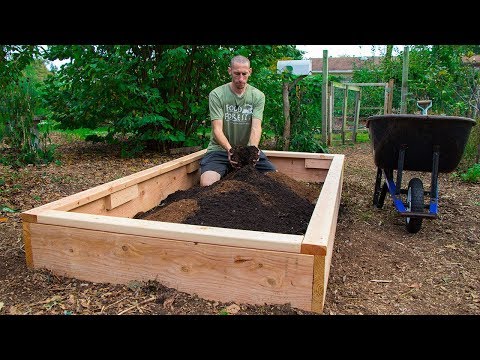
James Prigioni builds a 4-foot by 8-foot bed from three 2x10s and four 2x4s of Douglas Fir — explicitly not pressure-treated — staging the frame in its final spot before screwing it together. He fills with locally-sourced black leaf mulch mixed with garden soil, explaining at 9:06 that mulch alone is too alkaline and needs blending to absorb water properly.
Why it ranks here: Every decision is justified on camera: why skip pressure-treated wood 1:45, why countersink the screws 3:55, why level by adjusting the soil beneath the frame rather than shimming it 8:10. The reasoning sticks. One practical caveat: a commenter confirmed the initial materials list at 1:56 omits the extra 2x4 required for the interior cleat supports, which Prigioni mentions at 5:00 — that commenter also posted the corrected full list in the comments, so check there before you go shopping.
~10 min · straightforward · circular saw, or have lumber cut at the store
2
Best for longevity
How To Build Raised Garden Beds
SimonSaysDIY · 16:52 · Apr 2021
Simon builds raised beds with corrugated metal roofing panels set into a 2x4 timber frame, adding a top rail at 6:52 and interior cross-supports to stop the walls bowing outward under soil pressure. He seals the interior timber with roofing membrane to keep moisture away from the wood, then fills the base with leftover firewood before topping with compost and soil.
Why it ranks here: Corrugated metal solves the main weakness of all-wood builds: rot at the soil line. The video is the most structurally complete tutorial in this group — Simon shows not just how to assemble the frame but how to prevent the two failure points that kill most beds: bowing walls, addressed with the top rail, and frame movement, stopped by rebar stakes hammered in at 8:22. The roofing membrane detail extends the life of the timber frame quietly but significantly.
~16 min · intermediate · circular saw with metal-cutting blade
3
Best quick start
How to Build Cheap, DIY Raised Garden Beds In Under 30 Minutes
Epic Gardening · 3:14 · Oct 2016
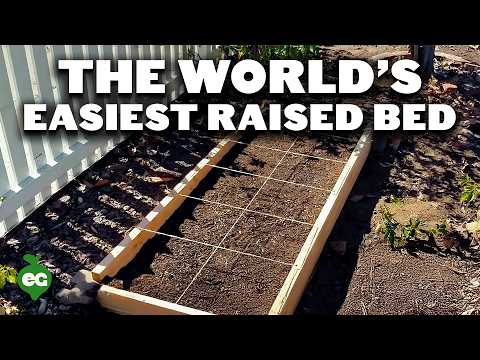
Kevin from Epic Gardening builds a 2-foot by 6-foot raised bed using commercial planter blocks with 2x6 boards slotted into them — assembled without nails, glue, or any fasteners at all. From setup to soil to planted spinach, chard, and butterhead lettuce takes under 20 minutes and under $50 2:40, with the square-foot planting method introduced alongside the build.
Why it ranks here: The only video here aimed at someone with no workshop experience and no time. Square-foot gardening is woven into the build rather than tacked on, so a first-timer leaves with a structure and a planting plan together. A commenter adds a genuinely useful point: the centre hole in each planter block is sized for rebar or form stakes, which prevents the blocks creeping outward under soil pressure — worth doing before the bed becomes permanent.
~3 min · beginner · no tools required
4
Best free build
How to Build a Mini RAISED BED Using ONE PALLET, FREE Backyard Gardening!
The Gardening Channel With James Prigioni · 15:34 · Apr 2023
James Prigioni disassembles a single free pallet by setting a skill saw blade depth to match the board thickness, freeing boards without splitting them; he then squares all boards to 43 inches and assembles a compact raised bed with end braces using 1¼-inch screws. Before any cutting begins, he explains the pallet stamp difference at 0:20: HT (heat treated) is safe for food growing; MB (methyl bromide) is not.
Why it ranks here: The HT versus MB check at 0:20 is the piece of information most pallet tutorials skip, and it matters — methyl-bromide-treated pallets should not be used near food crops. A commenter who built the same box described it as the most thorough pallet-dismantling demonstration available. The bed is compact and best suited to shallow-rooted crops such as lettuce and herbs; it makes a solid first project before scaling up to a larger timber build.
~15 min · intermediate · skill saw or handsaw, clamps
5
Best corrugated-metal alternative
Build a 4x8 Raised Garden Bed for $50! This Hack Makes it Stronger With No Wood (almost)
HAXMAN · 20:10 · Mar 2021
HAXMAN builds a 4x8 raised bed using corrugated metal roofing sheets for all four walls, with timber only at the corners, pre-drilling every hole before driving screws to avoid stripping the wood. He caps the sharp top edge with a drip rail and explains at 8:34 why he avoids pressure-treated lumber for anything holding food-growing soil.
Why it ranks here: Where SimonSaysDIY shows the cleaner finished result, this build suits someone working from salvaged roofing sheets or scrap timber. HAXMAN cuts himself on the metal at 17:57, which makes the safety warning feel earned rather than theoretical. A commenter suggests splitting a pool noodle lengthways and sliding it over the top edge as a free alternative to the drip rail — a practical fix if the moulding is hard to source locally.
~20 min · intermediate · circular saw with metal-cutting blade
6
Best for woodworkers
How to Build a MASSIVE Raised Garden Box - Free Plans!
DIY Builds · 6:27 · Mar 2020
DIY Builds constructs a large cedar raised box from 5/4-by-6 cedar decking boards and 2x6 construction lumber, joined with a Kreg pocket hole jig, wood glue, and 3-inch screws throughout. The slatted base is lined with a poly vapour barrier — drainage holes poked through after stapling — and mitered cedar trim rails finish the top edge on all four sides.
Why it ranks here: The result is the most polished of all builds here, and free plans are available at diybuilds.ca. It demands the most tools: chop saw, table saw, pocket hole jig, and brad nailer all appear. A commenter reported the slatted base collapsing after two years, noting the bottom strips were not heavy-duty enough. Adding a second cross-brace or heavier fastening at the base before filling is worth the extra twenty minutes.
~6 min · advanced · chop saw, table saw, pocket hole jig, brad nailer