Root rot kills plants gradually, and by the time the leaves turn yellow the roots are often badly damaged. Most short tutorials show you how to snip off black roots and repot, but skip the biology that explains why rot keeps returning — the dormant fungal spores that survive even in dry soil, the oxygen starvation that precedes rot, and the difference between a root that is dead and one that is merely stressed. The best video here covers all four.
Short verdict
Start with Kaylee Ellen. Her eighteen-minute Root Rot 101 is the only video in this set that explains root rot as a biological process — what happens to the root cortex, why bacteria and fungi thrive in waterlogged conditions, and how rot spreads plant-to-plant via fungus gnats. It then moves through identification, treatment, and prevention in sequence. If you already understand the basics and want to know why a well-draining mix can still produce rot, Sheffield Made Plants addresses the oxygen angle more directly than any other video here. For a hands-on demonstration using hydrogen peroxide on a real infected plant, The Jungle Haven shows the practical rescue well.
The ranking
1
Best overall
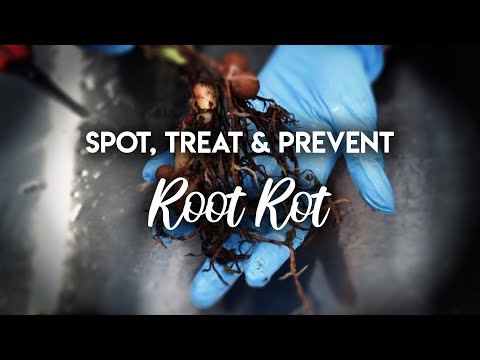
Root Rot 101 : How to Spot, Treat and PREVENT Root Rot!
Kaylee Ellen · 18:10 · May 2021
Kaylee Ellen presents root rot as a disease with identifiable causes — overwatering, fungus gnats carrying spores, and contaminated imported plants — and walks through identification, removal, treatment, and repotting in order. She covers spotting wilting and yellowing above soil, inspecting roots for sliminess and smell, cutting only to where rot has reached, treating with hydrogen peroxide or a dilute bleach solution, repotting into a correctly sized pot, and trimming foliage to match the reduced root mass.
Why it ranks here: It ranks first because it treats the viewer as someone who wants to understand the problem, not just react to it. The section at 0:30 on necrosis and how the outer root layer breaks down explains why sliminess is such a reliable indicator. Critically, at 8:26 she specifies cutting only as far as the rot has spread — not back to the stem — and at 11:47 she addresses the often-skipped step of removing foliage proportionally to lost roots. Skip that, and the reduced root system cannot sustain the canopy. A commenter confirmed the impact: 'Literally cringing because I've just treated a plant with root rot and I've done it all wrong. Now I'm off to treat my plant again — the right way!'
~18 min · introductory · houseplants · no prior reading needed
2
Best for understanding causes
The Shocking TRUTH About Root Rot Most People Get Wrong
Sheffield Made Plants · 10:31 · Feb 2023
Sheffield Made Plants argues that blaming overwatering alone is 'kind of lazy', and makes the case that oxygen starvation is the primary mechanism: when soil pores fill with water, roots suffocate, and dormant fungal spores then colonise the dying tissue. The video names three fungal genera responsible (Pythium, Phytophthora, Rhizoctonia), explains why standard garden compost creates almost no air pockets, and covers the role of perlite as a soil amendment — with a specific note that succulent mixes need a higher ratio.
Why it ranks here: The oxygen-first framing at 3:21 is the most useful diagnostic insight in this entire set for viewers who keep getting rot despite careful watering. Sheffield Made Plants is direct about something others obscure: overwatering compounds the problem but is not the root cause. The treatment section at 8:49 is brief — look for black or soft roots, keep the white and plump ones, repot into a well-amended mix — but accurate. A greenhouse worker in the comments added a precise correction to the watering advice: water when the pot has dried 1/4 to 1/3 of the way for larger containers, not just by the first inch or two.
~10 min · intermediate · houseplants · most useful after watching Kaylee Ellen first
3
Best hands-on demonstration
FUNGUS GNATS, ROOT ROT + PESTS | Plant Rescue With Hydrogen Peroxide 🌿
The Jungle Haven · 9:43 · Feb 2022
The Jungle Haven rescues a large dracaena that had been sitting in a pot with no drainage holes, showing root and soil inspection, trimming thin dead roots while leaving the paler healthy ones, soaking the roots in a hydrogen peroxide and water mix for a couple of minutes to kill the bacteria causing rot 4:40, then repotting into a mix of perlite, orchid bark, and coconut coir. Drainage holes are drilled into the original pot rather than sourcing a new one, and the leaves are separately sprayed with a more dilute 4:1 water-to-H2O2 ratio 7:29.
Why it ranks here: The practical detail here is denser than in any other medium-length video. The distinction between the root-soak concentration and the separate, weaker leaf-spray ratio is one that shorter videos skip entirely. Drilling holes in the existing pot rather than buying a new one is a sensible low-cost move. The warning at 7:46 — that undiluted peroxide is corrosive and will damage leaves — is given clearly and belongs in the method. A commenter reported: 'I tried this to my 2 new plants — one with rotten roots, the other with worms from fungus gnats — and they are now thriving.'
~9 min · intermediate · houseplants · 3% hydrogen peroxide required
4
Best recovery documentary
ROOT ROT RESCUE | saving my mostera thai constellation from root rot
Good Growing · 13:33 · Jul 2021
Good Growing documents a 32-week rescue of a Thai constellation monstera: diagnosing mushy roots, cutting all rotted tissue, rinsing in hydrogen peroxide 4:54, then recovering the plant in damp perlite with roots just above the water level 5:57. She films at regular intervals — at one week it had stopped getting worse; later, new root growth and multiple growth points began activating; after around 20 weeks in perlite she moved it to a pond basket with slow-release fertiliser; at 32 weeks 11:27 four new leaves had grown and a healthy root system was visible through an improvised clear pot made from a two-litre bottle.
Why it ranks here: No other video in this set shows what recovery actually looks like over months. The perlite method at 5:57 — roots touching but not submerged — is a practical middle ground between fully dry and overwatered that suits newly trimmed roots. The honesty about timeline matters: she left the plant in perlite for roughly 20 weeks before moving it on, and the recovery still took 32 weeks in total. That is the kind of figure viewers with a struggling plant genuinely need. 'I enacted the worst root rot I've ever seen on one of my plants and this gave me hope. I don't care if it takes one year for each of the six sections, as long as it survives.'
~13 min · intermediate · monstera · grow light helpful but not essential
5
Quickest practical reference
How to Get Rid of Root Rot with Household Items | Houseplant How-to Ep. 10
Pretty in Green · 2:31 · Sep 2020
Pretty in Green treats two plants side-by-side in under three minutes: one with 3% hydrogen peroxide diluted two parts water to one part peroxide 1:07, poured over the roots to foam and sterilise; the other with four drops of bleach per quart of water 1:53. She names the pathogen Pythium 0:40, notes it thrives in the anaerobic conditions created by overwatering, and frames both methods as repeated treatments used at every watering until recovery — which she estimates at two to three weeks 2:15.
Why it ranks here: If you need a fast reminder of the hydrogen peroxide approach and already understand the basics, this covers identification and the method clearly in under three minutes. The side-by-side view of blackened versus healthy roots at 0:16–0:38 is useful for anyone uncertain about what they are looking at. Comments confirm results: 'I bought 3 Peace Lilies and saved them this way.' Several commenters asked unanswered follow-up questions about aftercare after the bleach treatment, so treat the peroxide method as the reliable option here.
~2.5 min · beginner · houseplants · household items only
6
Quickest real-world example
My baby got the root rot! #plantcaretips #rootrot #planty #rescue #peacelily
PlantswithKrystal · 1:00 · Sep 2022
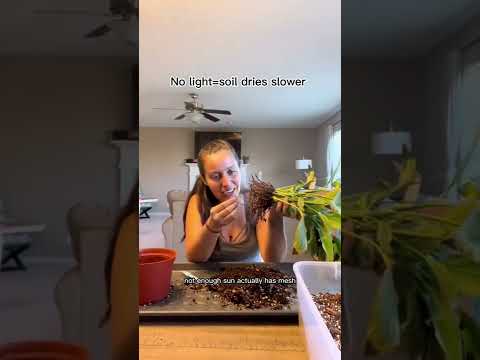
PlantswithKrystal treats her own peace lily after returning from holiday — removing all soil, rinsing the roots, applying hydrogen peroxide, downsizing the pot, and chopping yellowing leaves, all in under a minute of screen time. She names the three causes she found at 0:22: watering too often, no drainage, and insufficient light, then ends with a note to stay mindful of watering going forward.
Why it ranks here: Too short to teach the process on its own, but useful as a before-and-after reference showing what an infected peace lily looks like unpotted, how much root and leaf material gets removed, and how compact the rescued plant ends up. The steps are correct even if compressed. Use this alongside Kaylee Ellen rather than instead of it.
~1 min · beginner · peace lily · companion to a longer video
Where the videos disagree
Is the primary cause of root rot overwatering, or oxygen starvation?
Sheffield Made Plants argues that overwatering is only 'half the story' and that the real mechanism is oxygen starvation: when soil pores fill with water, roots suffocate, and dormant fungal spores colonise the dying tissue 3:21. Kaylee Ellen and The Jungle Haven frame overwatering as the direct cause, with bacteria and fungi described as organisms that thrive in the wet conditions that result.
Our read: Both are describing the same chain of events from different points of entry. Sheffield Made Plants is right that soil aeration is the proximate cause — which is why a perlite-amended mix can resist rot even when watered generously. Kaylee Ellen and The Jungle Haven are right that overwatering is the most common trigger. The practical advice is the same across all three: use a well-draining mix and water only when the substrate has partly dried.
What concentration of hydrogen peroxide should be used for treating roots?
Pretty in Green uses 2 parts water to 1 part 3% H2O2, poured directly over exposed roots. Kaylee Ellen mentions ratios of 2:1 or 1:1 depending on severity. The Jungle Haven uses a soak for roots and a separate, more dilute 4:1 water-to-H2O2 mix for the leaves 7:29.
Our read: All three start from the same 3% off-the-shelf product. The variation is in how much further you dilute it. A 2:1 water-to-H2O2 ratio (producing roughly 1% concentration) appears most consistently across the evidence. Use a more dilute mix for any leaf application. The core mechanism — bubbling to oxygenate while killing pathogens — is consistent across all ratios described.