Succulent leaf propagation has a reputation for being fiddly. It is not. Most tutorials stop just when the hard questions start: they show how to pull leaves and wait, then cut away before a single baby has been potted up. The other gap is that most cover only leaves, when beheading a leggy plant or taking a stem cutting is often the faster route.
Short verdict
For a full understanding of every propagation method — leaves, stems, beheading, and well-rooted stumps — start with Thang Plants. It is long at 17 minutes. But it is the only video here that tracks multiple trays across different stages and shows what a stalled or failed leaf looks like in real time. If you only want leaf propagation and want it done in four minutes, Chopstick and Succulents (the leaf-focused video) covers it better than anything else: it shows failed leaves alongside successful ones and explains exactly why they fail.
The ranking
1
Best overall
How to Propagate Succulents
Thang Plants · 17:44 · Sep 2017
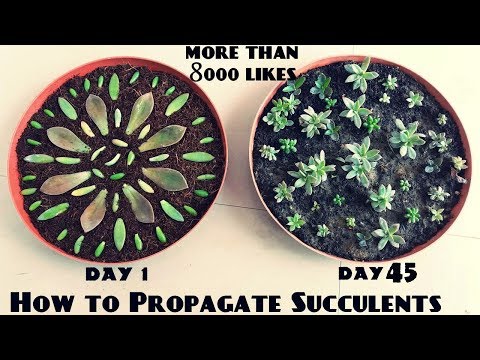
The presenter walks through four propagation routes (leaf cuttings, stem cuttings, beheading the rosette, and propagation from the bare-rooted stump) across multiple real trays at different stages. The video is 17 minutes and unpolished, but it covers the full timeline from fresh-pulled leaf to established plant, including the awkward middle phase where roots appear but no baby has yet formed.
Why it ranks here: No other video in the pack addresses the roots-with-no-baby scenario, which trips up many beginners. The presenter shows a leaf with a well-developed root system that will never produce a plant and explains the difference between a viable propagation and a stalled one 6:14–7:15. The casual camerawork is a small price for that honesty — multiple commenters note it is the first video that showed them what actually happens at each stage, rather than cutting straight to healthy babies.
~17 min · comprehensive · beginner to intermediate · all four methods
2
Best for leaf propagation
How to successfully propagate succulents from leaves
Chopstick and Succulents · 3:35 · Feb 2018
Trisha from Chopstick and Succulents focuses entirely on leaf propagation: selecting mature leaves, snapping them cleanly from the stem, drying for 3–5 days until calloused, and laying them flat on moist soil. She sets a realistic timescale of 2–3 months for a baby to form and explains what to do once it does.
Why it ranks here: The defining moment is a side-by-side comparison of leaves that failed against those that succeeded 1:23–1:42. A damaged body on the leaf does not matter — but if the tip that was attached to the stem is not intact, no baby will grow 1:07–1:22. Showing this physically, rather than stating it, is more useful than any written warning. If your propagation attempts keep producing nothing, watch this first.
~4 min · focused · leaf propagation only · beginner
3
Best if your succulents are elongated
HOW TO FIX ELONGATED SUCCULENTS ( Secrets to Fast Propagation)ASMR
Chopstick and Succulents · 4:42 · Mar 2018
Trisha explains why succulents stretch indoors due to insufficient light 0:10–0:24 and why the elongated shape cannot be reversed even with more sunlight 1:17–1:23, then reframes the problem: every part of a leggy plant can be used to propagate. The four methods covered are rosette-top cuttings, leaf propagation, bare-stem propagation, and letting the well-rooted stump sprout new pups 1:47–2:00.
Why it ranks here: This is the only video that turns a common indoor problem — a succulent that has grown tall and spindly — into a propagation lesson. Under five minutes with no wasted time. The practical advice is clear: plant fresh rosette cuttings without watering for 7–10 days, air-dry leaves 3–5 days until calloused, then lay on soil and mist every day or every other day 2:49–3:18.
~5 min · beginner · four methods · starts from elongated plants
4
Quickest start
How to Propagate Succulents
Garden Answer · 2:52 · Feb 2016
Laura from Garden Answer covers leaf propagation and beheading in under three minutes. She shows a clean leaf break versus a torn one 1:03–1:07, explains that a cut rosette top needs 5–7 days to dry before planting 1:58–2:00, and tells you to leave the bare stem base in the soil after beheading, as it will sprout new babies 2:15–2:21.
Why it ranks here: Uniquely among these videos, it flags that some succulent varieties are patented and illegal to propagate 0:22–0:40 — a warning beginners collecting cuttings at a nursery will not find elsewhere. Laura is also honest about failure rates, saying she rarely achieves 100% success 2:24–2:28. A clean three-minute watch before you start.
~3 min · beginner · leaf + beheading · quick reference
5
Best for seeing real results
How to Propagate Succulents Fast n Easy
Urban Gardening · 6:30 · May 2017
The Urban Gardening channel propagates four succulent species across a single coco-peat tray, then returns at 45–60 days to show the filled tray of rooted rosettes 5:28–5:47. The presenter advocates using pure coco peat rather than a mixed medium, citing a personal 100% success rate 3:25–3:32.
Why it ranks here: The before-and-after structure answers the question most beginners actually have: what should this tray look like in two months? Seeing a dense tray of established rosettes at 5:39 sets an honest expectation. The 100% success-rate claim applies to coco peat under the presenter's specific conditions, not a universal promise — but the result photograph is worth more than any written description of what to expect.
~6 min · beginner · leaf propagation · 45–60 day result shown