Mealybugs are stubborn because their waxy coating protects them from casual spraying, and their eggs and crawlers hide in cracks that most people never reach. Most videos pick one method and skip the two questions that actually matter: how bad is the infestation, and are there ants nearby? Those two factors change the entire treatment plan.
Short verdict
For most people, GARDEN TIPS is the right starting point: it ranks ten treatments in escalation order and covers the ant-symbiosis trap that lets infestations keep returning. For a three-minute expert summary on why your current approach may be failing, go straight to LogeesPlants — a working nursery owner making a specific, falsifiable point about pressure sprayers versus Q-tips. For a genuinely bad infestation, Garden Answer shows the full physical wash-and-repot process that surface sprays alone cannot replace.
The ranking
1
Best overall
10 EASY WAYS TO TREAT MEALYBUGS AND APHIDS ON PLANTS
GARDEN TIPS · 6:11 · May 2020
GARDEN TIPS runs through ten treatments — isolation, pruning, pressure-washing, soap water, neem oil, rubbing alcohol, a cocktail mix of all three, diatomaceous earth, chemical insecticides, and hydrogen peroxide — presenting them as a ranked escalation from least to most aggressive. The channel covers both leaf mealybugs and root mealybugs, gives the cocktail formula in full 4:26–4:57, and explains why ants foraging alongside mealybugs make the lighter methods largely useless 1:03–1:17.
Why it ranks here: What makes this the starting point is the order. Most videos give you a grab-bag of methods; this one instructs you to try option 10 first and reach for option 1 only if you fail. The patch-test instruction — spray a single leaf, wait one to two hours, and dilute further if the leaf wilts 3:12–3:25 — is practical advice that protects your plant during treatment, and almost no other video includes it. The hydrogen peroxide formula for root mealybugs 5:46–6:01 fills a gap that leaf-focused videos ignore entirely.
~6 min · beginner-friendly · household items or cheap shop supplies
2
Best expert quick-reference
How to Get Rid of Mealybugs - Part 1 of Logee's "Pest Prevention" Series
LogeesPlants · 3:18 · Mar 2022
Byron Martin of Logee's — a commercial nursery — identifies mealybugs by their cotton masses in leaf joints and growing tips, then demonstrates soaking a plant with isopropyl alcohol using a pressurised pump sprayer, not a misting bottle. He covers pure neem oil and ultrafine summer oils as smothering alternatives, and closes with a technique for plants that spend time outdoors: biological predators will clear the bugs outside, so spray the plant before bringing it back in to break the cycle 2:38–2:54.
Why it ranks here: The central point is one that actually changes how you work: the Q-tip method fails. Crawlers — the just-hatched insects that spread across the plant — move well away from where you can see them 1:35, so dabbing only kills the bugs already visible while leaving the infestation intact. A pressure sprayer that soaks the whole plant is the only way to reach them. That single point, delivered plainly by someone treating this at commercial scale, is worth three minutes of anyone's time.
~3 min · beginner-friendly · needs a pump pressure sprayer
3
Best for a severe infestation
Taking Care of a BAD Mealybug Infestation! 😝🤦♀️ // Garden Answer
Garden Answer · 13:44 · Oct 2020
Garden Answer documents a heavy mealybug outbreak on a collection of mangaves, working through physical shower-washing, removal of the top layer of soil where eggs and larvae concentrate 6:06–6:09, sanitising the pot in a diluted bleach solution, repotting in fresh compost, and a follow-up neem oil spray. The presenter is candid about having let the problem reach this point and about the work still ahead for the rest of the room.
Why it ranks here: This is the video to watch when a spray bottle is no longer enough. The repotting step — removing old soil because eggs live there — is absent from every other ranked video here. A commenter who dealt with a severe orchid infestation reinforces it: Q-tips pushed bugs deeper, so physical washing with a hard-bristle brush dipped in alcohol was the only thing that worked. The honest framing of ongoing weekly treatment 10:05 sets realistic expectations that the quicker guides do not.
~13 min · moderate effort · neem oil spray, fresh compost, and pot sanitiser needed
4
Best single-method guide
How to Kill Mealybugs INSTANTLY ☠️ Easy DIY Solution
Expedition Homestead · 3:27 · Mar 2020
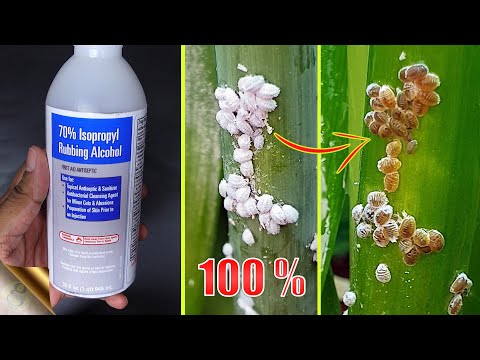
Expedition Homestead films a jade plant covered in mealybugs and demonstrates one method only: 91% isopropyl alcohol mixed one-to-one with water, sprayed into every nook and cranny including spots where bugs are not yet visible, because eggs can be too small to see 1:34–1:38. The video mentions neem oil as an alternative and recommends rinsing the plant with water roughly five minutes after spraying 2:06–2:24 to remove alcohol before it can cause leaf burn.
Why it ranks here: The focus is its strength. No ten-point list, no extended preamble — just a clear demonstration on a real plant with a real infestation. Alcohol dissolves the waxy coating on contact, and the 1:1 dilution is easier to replicate than the cocktail formula. For someone who needs to act today with what is already in the medicine cabinet, this is the video to start with.
~3.5 min · quick fix · 91% isopropyl alcohol and water only
5
Most thorough reference
How to get rid of MEALYBUGS fast!
Free Plants Forever · 23:54 · Feb 2023
Free Plants Forever runs 23 minutes across 27 named chapters covering identification, where bugs hide, tools required, spot-testing, paintbrush application, spray-bottle mixing (half a cup of 70% isopropyl alcohol plus half a cup of water 11:49–12:22), outdoor ant-mealybug colonies, and separate treatment approaches for propagations, succulents, and arrangements. The comparison of cotton swabs against a fine-tipped paintbrush — the brush reaches crevices that swabs cannot 19:01 — is the most detailed tool discussion of any video here.
Why it ranks here: If you have a mixed collection — succulents, propagation trays, trailing plants, arrangements — this is the only ranked video that addresses each plant type separately. The outdoor section showing an active ant-tended mealybug nest 21:38–22:32 is unusually clear on how the two pests co-operate. The main trade-off is length: the formula appears at the chapter marked 6:22, and several comments flag the padding. Use the chapters.
~23 min · comprehensive · 70% isopropyl alcohol and water
6
Best step-by-step walkthrough
How To Get Rid Of Mealybugs On Houseplants
My City Plants · 12:11 · Jul 2020
Juliette of My City Plants presents a calm two-stage method: manual removal of visible bugs using cotton balls and swabs soaked in rubbing alcohol, followed by a spray of one cup rubbing alcohol, water, and a few drops of dish soap 8:52–9:15 applied to the whole plant, including undersides and the topsoil. The video grades infestations as light, moderate, or heavy and advises discarding heavily infested plants rather than risking spread.
Why it ranks here: The prevention section here is better developed than in any of the treatment-focused videos — regular leaf-cleaning, inspecting undersides and topsoil, building a check-up routine — which is useful once the immediate problem is solved. The commenter community backs up the method with multiple reports of success on orchids, hibiscus, and bonsai. Suited to someone new to houseplants who wants treatment and ongoing care in one place.
~12 min · beginner-friendly · rubbing alcohol, cotton balls, and dish soap
Where the videos disagree
Are cotton swabs useful for treating mealybugs?
LogeesPlants argues cotton swabs and Q-tips are a waste of time: crawlers move well away from visible colonies, so dabbing only kills the bugs you can already see 1:35. My City Plants and GARDEN TIPS both recommend swabs for light infestations. Free Plants Forever finds a fine-tipped paintbrush more effective than swabs because it reaches tight crevices 19:01, but still uses swabs as a cautious first step on plants with uncertain sensitivity.
Our read: All three positions can be right at different stages. Cotton swabs are a reasonable tool for removing a handful of adults on a plant you have just noticed — they confirm the kill and let you monitor. Once adults are widespread, or ants are nearby, switch to a pump sprayer that soaks the whole plant. A paintbrush dipped in alcohol, as both Free Plants Forever and a Garden Answer commenter demonstrate, is a practical middle ground for plants with dense foliage or tight leaf joints.
Should you rinse the plant with water after applying rubbing alcohol?
Expedition Homestead recommends rinsing the whole plant with water about five minutes after spraying to remove alcohol before it can cause burning 2:06–2:24, while acknowledging they have sometimes skipped this step without obvious harm. A commenter on that video takes the opposite view: water the soil beforehand instead, and do not rinse afterwards. Free Plants Forever says to keep the treated plant out of direct sunlight while it dries but does not advise rinsing.
Our read: The burn risk appears to be conditional on direct sun hitting a wet, alcohol-treated leaf. Treating in shade or in the evening and letting the plant dry naturally is the practical consensus. Rinsing is a reasonable extra precaution for young or sensitive plants.