Pothos is forgiving, but the method most people try — dropping a long vine into a glass of water — produces one spindly root tip on an otherwise wasted stem. The fix is cutting at individual nodes, not long sections, and keeping those cuttings somewhere genuinely warm. Most videos show you what to do without explaining why the common approach produces such disappointing results.
Short verdict
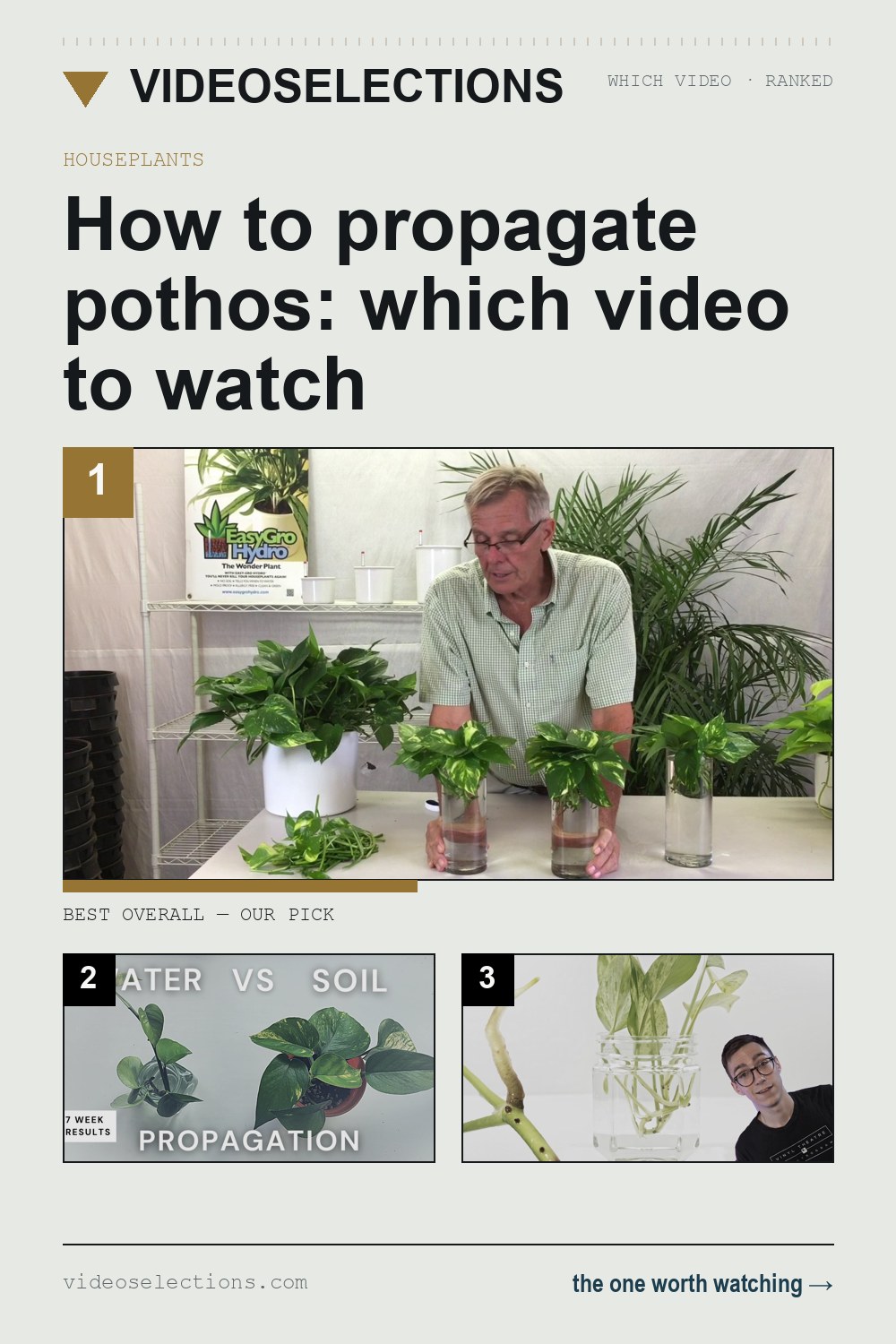
Start with The Hydroponics Guy. He names the mistake most beginners make, explains the node-cutting logic from first principles, and shows exactly how to pack multiple cuttings into one pot so the result is a full plant rather than a single trailing vine. If you're genuinely unsure whether to root in water or go straight into soil, watch Budget Botany next — it runs a proper seven-week side-by-side and shows you the actual difference.
The ranking
1
Best overall
Propagating Pothos from Cuttings
The Hydroponics Guy · 9:07 · May 2017
Jerry Har walks through what he calls the 'leaf and eye' node-cutting technique on a mature pothos he's trimming back. He explains what a node is, why the stem between two nodes gets discarded, and how to set 12–15 cuttings into a single 4-inch hydroponic planter packed with pre-soaked clay pebbles — with guidance on how many to use in a 5-inch pot too.
Why it ranks here: The key moment is 1:48, where he calls out the long-vine-in-water approach directly: one tiny root tip, barely alive, and a plant that never fills out. That framing makes the rest of the method make sense rather than feel arbitrary. He covers temperature clearly — roots need warmth, and he recommends the kitchen counter or above the dishwasher 4:07 as the best spot. Commenters confirm the method works: one reports going from a single leggy vine to over twenty plants. The hydroponics setup is easy to follow even if you have no prior interest in hydroponics.
~9 min · easy · no specialist tools needed
2
Best for water-vs-soil comparison
Water vs Soil Propagation: 7 Week Comparison with Pothos | Should I propagate in water or soil?
Budget Botany · 8:16 · Aug 2021
Budget Botany takes 12 cuttings from a golden pothos, splits them evenly between a soil pot (70% houseplant mix, 30% perlite) and a glass of tap water, then films updates at day 10, 17, 24, and 49. All water cuttings had roots by day 24 and were transferred to the same soil mix for a fair final comparison.
Why it ranks here: This is the only video in the evidence pack built as a documented experiment with real results shown. By week seven, the water-first pot was noticeably fuller 6:29. The presenter is honest about trade-offs: water lets you watch roots form but adds a step, and she makes a point worth holding onto — the longer cuttings stay in water, the harder the transition to soil becomes 4:07–4:13. That single caveat saves viewers from leaving cuttings in water for months and then wondering why the plants sulk after potting.
~8 min · beginner · experiment format with documented results
3
Best for long-term results
How To Propagate Pothos Cuttings ( 2 BEST Methods)
Techplant · 11:52 · Mar 2019
Techplant shows two methods side by side: a single long cutting dropped into water, and a vine cut into individual node sections with roughly an inch on either side of each node 3:03, all rooted in water before being moved to soil. The video then documents both plants across several months.
Why it ranks here: Most propagation videos end when the cuttings go into soil. This one keeps filming. By January, the multi-cutting pot had grown extremely thick 10:35 while the single-vine plant looked sparse by comparison — which is stronger evidence than any diagram. He also notes that chlorinated tap water may inhibit rooting 2:09, though he doesn't specify an alternative. If you want to see why node cutting matters before you commit to the method, this video is the proof.
~11 min · beginner · months of documented growth
4
Best for beginners covering multiple plants
Plant propagation for beginners » 5 indoor plants
Pick Up Limes · 17:36 · Apr 2020
The Pick Up Limes pothos section opens at 0:59 and covers water propagation: snipping at any point a leaf emerges from the vine, keeping nodes submerged, topping up water as it evaporates, and transplanting once roots reach roughly two centimetres 3:39. The video then moves on to string of hearts, monstera, pancake plant, and ZZ plant.
Why it ranks here: If pothos is your first propagation attempt and you want to build confidence across several common houseplants in one sitting, this is a calm and clear starting point. Pothos is treated as the gateway example — the one that teaches the general principles — before moving to more complex plants. It is strongest on the water method and on transplanting into moist soil. It does not go into the node-cutting depth that The Hydroponics Guy covers, so it sits well as a complement rather than a replacement.
~17 min · introductory · five plants covered
5
Best for propagating multiple varieties
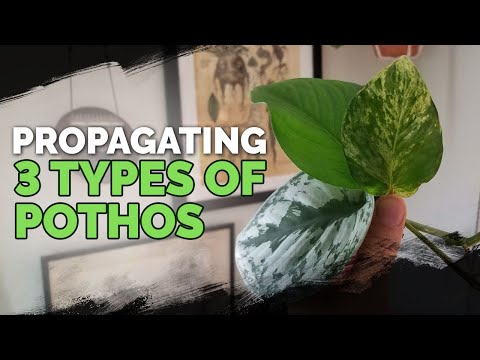
Propagating 3 Types of Pothos via Water Cuttings (Foolproof Method) 🌱
Epic Gardening · 21:42 · Nov 2018
Epic Gardening propagates three types — satin pothos, marble queen, and green queen — using glass test tubes and other water vessels, then revisits after a couple of weeks to show actual root development on each. The video covers what worked, what did not, and then moves into potting.
Why it ranks here: The honest reporting sets it apart. End pieces sometimes root poorly 7:07; the marble queen was slower than the others 9:58; not every cutting succeeds 11:13. A commenter explains why: higher variegation means less chlorophyll, which slows root development — a point the presenter implies but does not state directly. If you are propagating a variegated variety and wondering why it is taking longer, this video and its comment section will tell you. The 70°F temperature guideline at 3:39 is one of the few specific figures given across all these videos.
~21 min · intermediate · three varieties compared
6
Best quick reference
How to Propagate Pothos in Water
Tenney Plants · 5:00 · Dec 2020
Tenney Plants explains nodes, cuts with one to three leaves per section, places cuttings in repurposed make-up jars of water, and checks back about a month later when the first roots appear. She notes this is being done in winter, which slowed the process considerably.
Why it ranks here: Commenters repeatedly thank this video for being under five minutes. The winter context is genuinely useful: roots that typically appear in 7–14 days 4:02 took around a month in cold conditions, which saves anyone working in winter from panicking. Rooting hormone is described as unnecessary for pothos 3:03–3:16. One practical note from a highly-liked comment: use containers with wide openings — narrow-necked jars risk tearing the root ball when you try to remove cuttings for potting.
~5 min · beginner · water method only
Where the videos disagree
Does water-first or straight-to-soil produce a better result?
Budget Botany's seven-week comparison found water-first cuttings noticeably fuller by week seven. The Hydroponics Guy skips water entirely and goes straight to clay pebbles, producing a stable full plant. Techplant tries both and reaches the same practical conclusion as Budget Botany: multiple node cuttings, however you root them, beat a single long vine.
Our read: Water first gives you visible confirmation that roots are forming, which matters when you are learning. The Budget Botany data suggests the fuller result at seven weeks. Both approaches beat the long-vine method, so the choice mostly depends on whether you want to watch the roots develop.
Is rooting hormone worth using?
Tenney Plants says rooting hormone is not necessary for pothos. Paige Tailyn uses 'prop drops' and treats them as helpful. A top commenter on Paige Tailyn's video argues the drops are a waste of money, stating that pothos secrete their own rooting hormones and root readily without any supplement.
Our read: The evidence across these videos points against rooting hormone for pothos. The plant roots reliably on its own.